
TL;DR
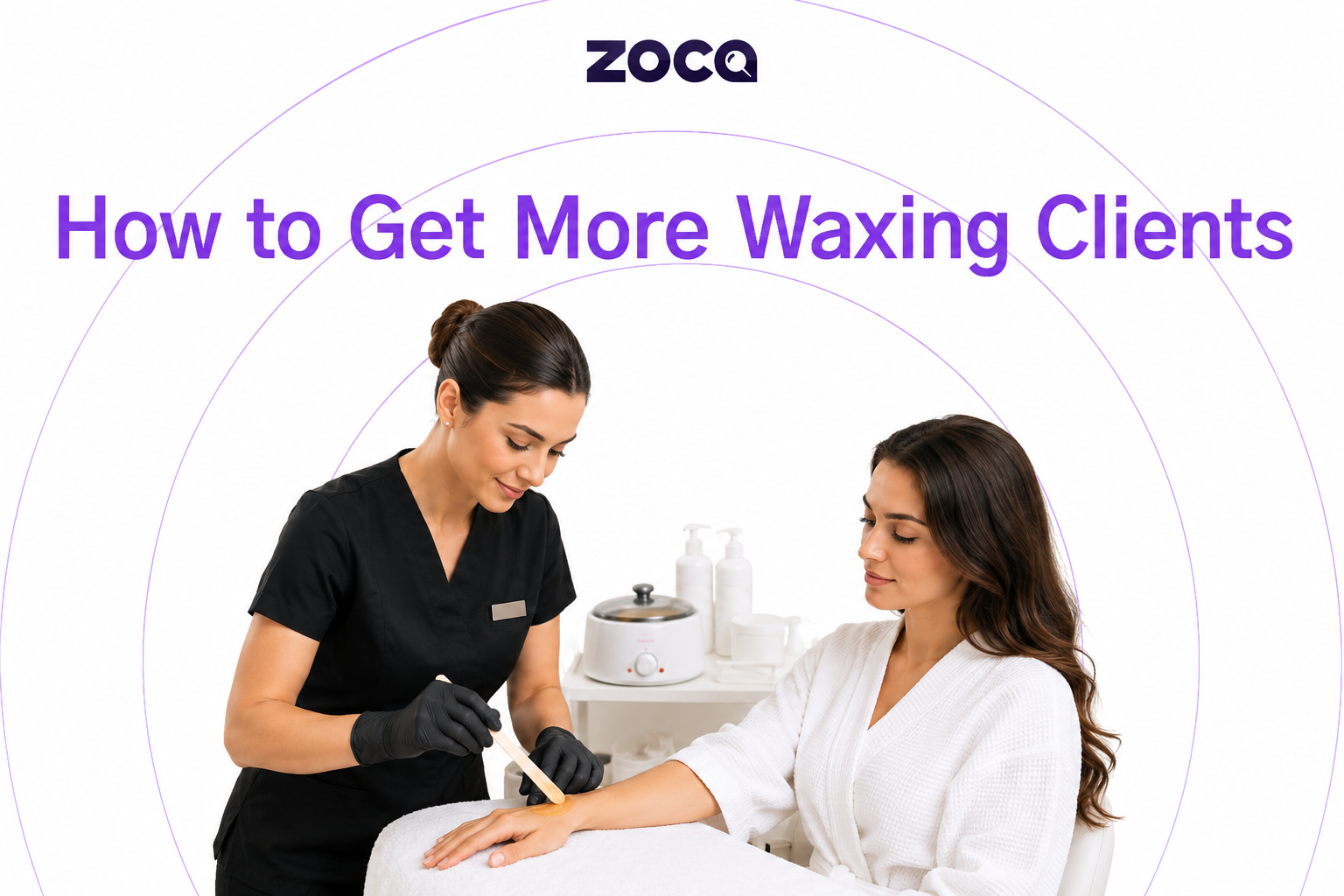
Waxing has one of the most predictable rebooking cycles in the beauty industry: most clients need a visit every four to six weeks. That regularity is your biggest growth asset, if you have a system that captures new clients on Google and automatically follows up to bring them back. This guide covers how to get found locally, how to convert every enquiry fast, and how to automate the rebooking conversation so your wax schedule fills itself.
Introduction
Waxing clients are, by nature, repeat clients. They need to come back. The service demands it every four to six weeks, like clockwork.
That makes waxing one of the best services to build a stable, predictable income around, if you can get new clients in the door consistently and then hold on to them. The problem most waxing specialists face isn't quality. It's visibility and follow-through.
A potential client searches "waxing near me," finds three or four options on Google Maps, picks one based on reviews and proximity, books once, and then never hears from you again. If the experience was good, they might come back. If they got busy, forgot, or found someone closer, they drifted. That cycle of finding new clients to replace the ones who drifted is exhausting and expensive.
This guide covers both sides of the equation: how to get found by more local clients on Google, and how to build the follow-up system that turns every first visit into a long-term regular without you having to manually track every client's schedule.
Why Waxing Clients Are the Most Valuable Clients You Can Build Loyalty With
Before getting into tactics, it's worth understanding why waxing clients are uniquely valuable from a business perspective.
Most beauty services have unpredictable return cycles. A client might get a haircut every six weeks or every four months. A manicure client might come every two weeks or every six. The timing is driven by personal preference and varies widely.
Waxing is different. Hair regrowth dictates the schedule. Most clients need to return every four to six weeks regardless of preference. That regularity means you can predict income, plan capacity, and build a calendar that doesn't require constant new client acquisition to maintain.
The math is simple. If you have 30 active waxing clients on a six-week cycle, you're seeing each of them roughly eight times a year. At an average of $60 per visit, that's $1,440 per client per year. A cohort of 30 active clients generates approximately $43,000 annually from repeat visits alone, before a single new client walks through the door.
The focus, therefore, is two things: getting new clients in, and not losing the ones you already have. The same three-part system covered in the guide on how to get more salon clients applies directly here.
Step 1: Get Found on Google for "Waxing Near Me" Searches
When someone in your area decides they need a wax, they search. Usually "waxing near me," "eyebrow wax [city]," "Brazilian wax [neighbourhood]," or similar. The businesses that appear in the Google Local Pack- the top three map results capture most of the bookings.
Getting into that Local Pack comes down to three things: your Google Business Profile, your reviews, and your local authority signals.
Your Google Business Profile for waxing services:
Most waxing specialists set up a GBP profile once and never update it. That's a problem. Google's algorithm rewards active profiles. The ones that rank highest are updated regularly, have fresh photos, and show recent review activity. Why your salon isn't showing up on Google comes down to exactly this pattern in the majority of cases.
Specific to waxing, make sure your GBP includes:
- Waxing listed as a primary service category (not just "beauty salon")
- Individual service entries for each waxing type you offer (Brazilian, eyebrow, full body, etc.) with prices and descriptions
- At least one new photo per week: treatment rooms, product setup, before-and-after brows (with consent)
- A response to every Google review, including the negative ones
Zoca's free Google Business Profile Optimizer audits your profile and tells you exactly what's missing and what to fix first. It takes about ten minutes to run and gives you a prioritised action list.
Building reviews consistently:
Reviews are the most direct ranking signal for local waxing searches. More recent, specific reviews improve your position. The salons that dominate "waxing near me" searches in any city typically have both a high volume of reviews and a high recency, reviews from the last 30 to 60 days.
The most effective review request is a short message sent within a few hours of the appointment: "So glad you came in today! If you have a moment, your Google review would mean a lot [link]." Done this way, at the right moment, most satisfied clients will leave one. Waiting days or sending a general newsletter blast doesn't produce the same result. The complete system for getting more Google reviews without being pushy is worth reading alongside this step.
For a full breakdown of how the Google algorithm decides which salons rank, the guide on how to get more salon clients from Google without running ads covers the mechanics in detail.
.png)
Step 2: Convert Waxing Enquiries Before They Go Somewhere Else
Getting found is step one. Converting the enquiry is step two, and it's where most waxing specialists lose clients they've already worked hard to attract.
The data on lead response is stark. According to research on consumer behaviour published by Harvard Business Review, the odds of converting an inbound enquiry drop by over 90% if the response takes longer than five minutes. Most salon owners take hours, sometimes days, to respond to a booking enquiry or DM. By then, the client has already booked somewhere else.
For waxing specifically, this is critical because waxing clients are often booking for an upcoming event: a holiday, a wedding, or a date. The urgency is real. If you don't respond in the first ten to fifteen minutes, you've likely lost that client to whoever was faster. The full picture of what slow response costs you is laid out in the guide on how to respond to salon leads faster.
What this means practically:
- Your booking link needs to be on your GBP, your Instagram bio, and your website, and not buried or hard to find
- Enquiries that come in via DM or contact form need a near-instant response or an automated acknowledgment that tells the client you'll confirm shortly
- Your confirmation message should include date, time, and a simple pre-care note (nothing too long, just what to do before they arrive)
Zoca's Win Agent handles instant response to new enquiries automatically, sending a confirmation and booking link within seconds of someone reaching out, whether they came from Google, Instagram, or your website.
.png)
Step 3: Use Local Demand Data to Find Untapped Waxing Searches in Your Area
Most waxing specialists market themselves the same way: Instagram posts, word-of-mouth, maybe some stories. Very few are looking at what their local clients are actually searching for on Google.
Local search data tells you which waxing services have demand in your specific area that nobody is ranking for. "Male waxing [city]," "full body wax [suburb]," "sugaring vs waxing [city]," these are real searches your potential clients are making. If no local business is ranking for them, you can. Understanding how local SEO rankings work for beauty businesses is the foundation for making sense of that data once you have it.
Zoca's free Local Business Demand Tracker shows you the actual search demand in your area, broken down by service type. It takes about five minutes to run and shows you which searches are high volume and low competition, the ones worth going after.
For a waxing specialist, this typically reveals:
- Underserved service searches in your specific neighbourhood
- Seasonal demand patterns (pre-summer, pre-holiday spikes)
- Service gaps competitors haven't filled
Step 4: Automate Your Waxing Rebooking Reminders
This is the part most waxing specialists skip, and it's the part that costs them the most revenue.
After a great appointment, a client leaves intending to come back. They mean it. Life gets in the way. Four weeks pass. Then five. Then six. Then they're self-conscious about how much regrowth there is, and they feel awkward booking again. Or they just forgot and booked somewhere more convenient.
A rebooking reminder sent at the right moment prevents all of this.
The right moment is 24 to 48 hours after the appointment for the first touch ("so glad you came in, here's what to expect over the next few weeks") and then again at the four-week mark with a direct rebooking prompt.
The four-week message works like this: "Hey [name], it's been four weeks since your last visit, your skin is probably telling you it's time! Your next appointment slot is waiting. [booking link]"
Short. Specific. Action-oriented. No newsletter. No promotion. Just a direct prompt that lands at exactly the moment when the client is actually thinking about booking again. This is the same principle behind every effective client retention strategy for salons and spas: timing matters more than frequency.
For a busy waxing specialist with 40 to 60 active clients, tracking every client's four-week mark and sending individual messages isn't realistic. This is exactly what Zoca's Loyalty Agent does: automated post-visit messages and rebooking reminders based on each client's appointment history, sent at the right time without you having to track anything.
Step 5: Build Waxing Clientele Through Referrals
Word-of-mouth is the highest-converting lead source for waxing because it comes with social proof already attached. A friend recommending a waxing specialist eliminates the hesitation that comes with searching cold.
The problem with relying on word-of-mouth alone is that it's unpredictable. Some months are full. Others are slow. You can't control when someone happens to recommend you.
A referral program turns the unpredictable into something consistent. The simplest version: offer your current client a discount on their next visit when a friend they refer books for the first time. Something like: "Send a friend and get $10 off your next appointment when they book."
The message needs to go out at the right moment. The best time to ask for a referral is immediately after a great appointment, when the client is happy and relaxed. A short post-visit message that includes the referral offer captures that moment. Waiting until next month's newsletter misses it entirely.
For more on building a referral system that produces consistent results rather than occasional ones, the guide on how to build a salon referral program covers the setup step by step.
The Waxing Client Lifecycle: What Good Looks Like
Understanding where clients typically drop off helps you build a system that catches them at each point.
Most waxing specialists focus all their energy on the top of this table, finding new clients. The biggest revenue gains come from fixing the middle and bottom: converting enquiries faster and keeping the clients you already have. If clients are finding you but not booking, the salon booking funnel breakdown explains exactly where the drop-off typically happens and why.
How to Handle Common Objections Waxing Clients Have
"I'll wait until there's more regrowth." Hair needs to be at least a quarter inch for wax to grip effectively, usually two to four weeks of growth. Most clients underestimate this and think they need to wait longer. A clear pre-visit guide that explains the right amount of growth addresses this and prevents the overly long wait between appointments.
"It's too painful." Pain management in waxing has improved significantly with better formulations and techniques. Clients who had a bad experience elsewhere often carry that expectation. Addressing it directly, "I use a low-temperature hard wax on sensitive areas, which is significantly less painful than strip wax," removes the objection before the appointment.
"I can do it at home." Some clients try home waxing or sugaring and come back because the results aren't the same. Don't compete with this objection; just deliver a consistently better result and let the experience make the case.
Key Takeaways
- Waxing clients have a built-in return cycle of four to six weeks. Building a system around that cycle is the fastest way to create a stable, predictable income.
- Your Google Business Profile is your most important marketing tool. Active profiles with specific service listings, fresh photos, and recent reviews consistently outrank inactive ones for local waxing searches.
- Speed of response to new enquiries is the single biggest conversion variable. Most clients book whoever responds first, not whoever has the best reviews.
- Automated rebooking reminders at the four-week mark recapture clients before they drift. Manual follow-up doesn't scale once your client list grows past 30 to 40 people.
- Referrals are the highest-converting lead source for waxing. A simple post-visit referral prompt turns satisfied clients into a consistent source of new bookings.
- Understanding local search demand in your specific area reveals untapped service searches that competitors aren't ranking for.
.png)
Conclusion
Building a full waxing schedule comes down to three things running together: being visible when local clients search, responding fast enough to convert their interest into a booking, and following up consistently enough that they come back on their natural four-to-six week cycle.
Most waxing specialists do one of these reasonably well. Very few do all three consistently, because doing it manually is hard when you're also the one doing all the waxing.
The clients you lose to slow response times and missed rebooking reminders are clients who would have come back if you'd had a system in place. They didn't leave because they were unhappy. They left because the follow-up didn't happen. That's the gap worth closing first.
To see how Zoca handles Google visibility, instant lead response, and automated rebooking reminders for waxing specialists and beauty businesses, book a free demo and we'll walk you through exactly how it works.
FAQ: How to Get More Waxing Clients
How do I get my first waxing clients when I'm just starting out?
Your Google Business Profile is the most important first step. Set it up completely with waxing as your primary service, add your service menu with prices, and add photos of your treatment space. Then ask every person you know for a Google review even if they haven't visited. The review tells Google your business is real and active. Run a small opening offer for first visits only, and post it on your personal social accounts to get initial bookings. Once you have your first ten to fifteen clients, ask each of them to refer one friend. The same approach works for other service niches the guide on how to get clients as a lash tech covers a very similar starting-from-scratch process.
How often should I remind waxing clients to rebook?
The first reminder should go out four weeks after their appointment for clients on a four-week cycle, or five weeks for clients with slower regrowth. A second, shorter nudge one week later catches those who didn't respond to the first. Don't send more than two reminders per cycle, beyond that it reads as pressure rather than helpfulness. The message should be direct and include a booking link, not just a general nudge.
What's the best way to ask for a Google review from a waxing client?
Send the review request within two to four hours of the appointment, while the experience is fresh. A short, personal message works better than a formal email: "So glad to see you today, if you have a second, a Google review would genuinely help me out. [link]." Clients who receive this kind of direct, timely request leave reviews at a significantly higher rate than those who receive a review request a week later in an automated newsletter. The timing principle and message formats that work consistently are covered in full in the guide to getting more Google reviews for salons.
How do I stand out from other waxing salons in my area?
Specificity wins. If your GBP lists only "beauty salon" as your category, you're competing against every salon in the area. If it lists "Brazilian waxing," "eyebrow waxing," and "full body waxing" as specific service categories, you appear in those specific searches. Add photos of your specific wax products and treatment room. Respond personally to every review. Add Q&A content to your GBP that addresses common questions ("do you use hard or soft wax?" "what should I do before my appointment?"). These signals tell Google and potential clients that you're the specialist. The full list of tactics for ranking higher on Google Maps applies directly to a waxing-specific GBP.
How do I keep waxing clients coming back without being annoying?
The key is relevance and timing. A message that arrives at exactly the four-week mark after their appointment is not annoying, it's expected. A message that arrives out of nowhere with a promotion for something unrelated is. Keep your follow-up messages short, personal, and tied to their specific appointment history. "It's been four weeks since your last wax time to rebook?" lands completely differently from "Check out our special offers this month!" The broader principles behind retaining salon clients without discounting apply here, too.
Do I need a website to get more waxing clients?
You need a bookable presence online, but it doesn't have to be a full website. Your Google Business Profile, a complete Instagram profile with a booking link in bio, and a simple online booking system cover most of what a website would do for a local waxing specialist. If you do have a website, make sure it loads fast on mobile, has your booking link above the fold, and includes your specific services with pricing. Most waxing clients find you on Google or Instagram and book directly they rarely spend time on a full website.