


.png)
The best spa software in 2026 is not whichever tool has the longest feature list. It is the one that solves the problem costing your business the most bookings right now. Most spa software manages bookings. It does not create them. For most spas, that problem is not operations, it is visibility.
Zoca works with 1,000+ salons and spas across the US. The pattern is consistent: spas struggling with bookings are almost always missing visibility, not software features.
New clients are searching for spas like yours on Google every day, and most spa software does nothing to help you show up. This guide covers 8 tools across every category: booking, operations, retention, and growth. For each one, you will get honest features, real pricing, a clear "best for," and a comparison table so you can make a fast, informed decision.
Why the Right Spa Software Choice Matters More in 2026
Most spas are running on the wrong category of software without knowing it.
Booking software manages the clients who have already decided to visit you. It organises your calendar, processes payments, sends reminders, and keeps client records tidy. That is real value. But it does nothing for the person searching "day spa near me" on Google right now who has never heard of your business.
According to Think with Google, 76% of people who search for a business nearby on mobile visit that business within 24 hours. That means the spa that shows up first gets the booking. Everyone else gets ignored. Local search is where new clients are being won or lost every single day, and most spa software does not touch that problem at all.
Every spa grows through the same system: visibility (getting found), conversion (turning enquiries into bookings), and retention (bringing clients back). Most software only covers one part of this system.
The gap between a spa running at 60% capacity and one with a full calendar most weeks is almost never the booking platform. It is discovery: whether new clients can find the spa when they search. And most spa owners are not aware of the number of clients dropped-off in the booking funnel, especially between enquiry and confirmation.
Understanding which category of software solves which problem is the most important decision you will make before choosing software in 2026.
How We Selected These Spa Software
Every spa software on this list was evaluated against five criteria specific to spa and wellness businesses in the US.
1. Industry fit: Each platform is built for, or widely used by, spas, med spas, or wellness businesses. Generic scheduling tools with no spa-specific adoption were excluded.
2. Core problem coverage: The list includes tools across booking, operations, retention, and growth. Most comparisons only evaluate scheduling software, but that does not reflect how spas actually grow.
3. Real-world usage: These tools are actively used by spa businesses today. Platforms with limited adoption or unclear positioning in the spa category were excluded.
4. Verified pricing and transparency: Pricing is based on publicly available information as of 2026. Tools requiring custom quotes are clearly marked.
5. Relevance to business outcomes: Each tool was evaluated based on how it impacts bookings, either through operations efficiency, retention, or new client acquisition.
Quick Comparison: Best Spa Software at a Glance
Most tools on this list fall under booking software for spas, focused on managing appointments rather than driving demand.
Which Spa Software Should You Choose?
If your calendar is not full, your problem is not software. It is visibility.
- If your spa is fully booked but chaotic internally: Focus on operations software
- If clients visit once and don’t return: Phorest or Zoca
Most spas don’t have a software problem. They have a visibility problem.
The 8 Best Spa Software in 2026
1. Zoca — Best for Getting New Clients, Conversion, & Retention
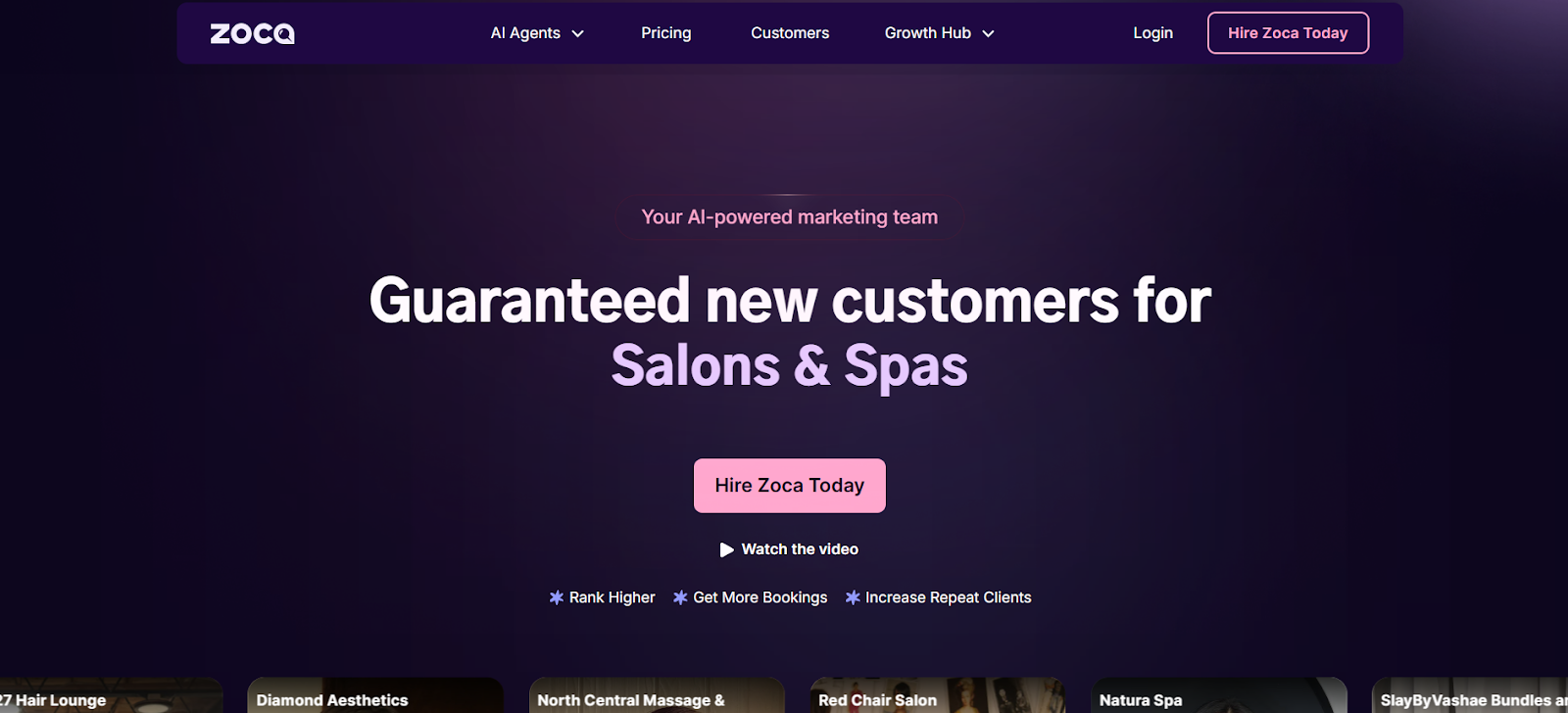
Zoca is the only platform on this list that covers the full client journey: getting found on Google, converting inquiries into confirmed bookings, processing payments, and bringing clients back automatically.
Most tools start when a client lands on your booking page. Zoca starts when they search.
Zoca is an all-in-one AI marketing and booking platform built specifically for spas, salons, and wellness businesses across the US. It is the only tool on this list that focuses on the part of the client journey that happens before the booking, getting found, and then handles everything that follows in the same platform.
Most spa software starts when a client lands on your booking page. Zoca starts earlier, at the moment a potential client types "day spa near me" or "facial near me" into Google.
The Discovery Agent manages your Google Business Profile, builds local SEO signals, and pushes your spa up the local rankings so you appear before competitors when it counts.
Once a lead arrives, the AI Front Desk Agent responds automatically, answers questions, checks live availability, books the appointment, and collects payment, all without you having to pick up the phone mid-treatment, and across every channel a client might reach out through: calls, SMS, website chat, or social DMs.
The Loyalty Agent handles post-visit follow-ups and rebooking reminders automatically, so clients return without you having to chase them.
This is where AI marketing automation for spas becomes critical, handling visibility, response, booking, and follow-up without manual effort.
Best for: Day spas, med spas, estheticians, and wellness businesses that want a consistent flow of new clients from Google and AI search, with booking, payments, and retention handled in the same platform, without running ads or paying agency fees.
Key strength: The only platform on this list that covers the full client journey as a connected system: local search visibility, AI-powered booking and payment capture, and automated retention running in the background.
Honest limitation: Zoca does not offer class scheduling, membership management, or staff payroll — it is built for service-based spas and wellness businesses rather than fitness or studio operations.
Starting price: Current pricing at zoca.com/demo.
2. GlossGenius — Best for Independent Spa Professionals
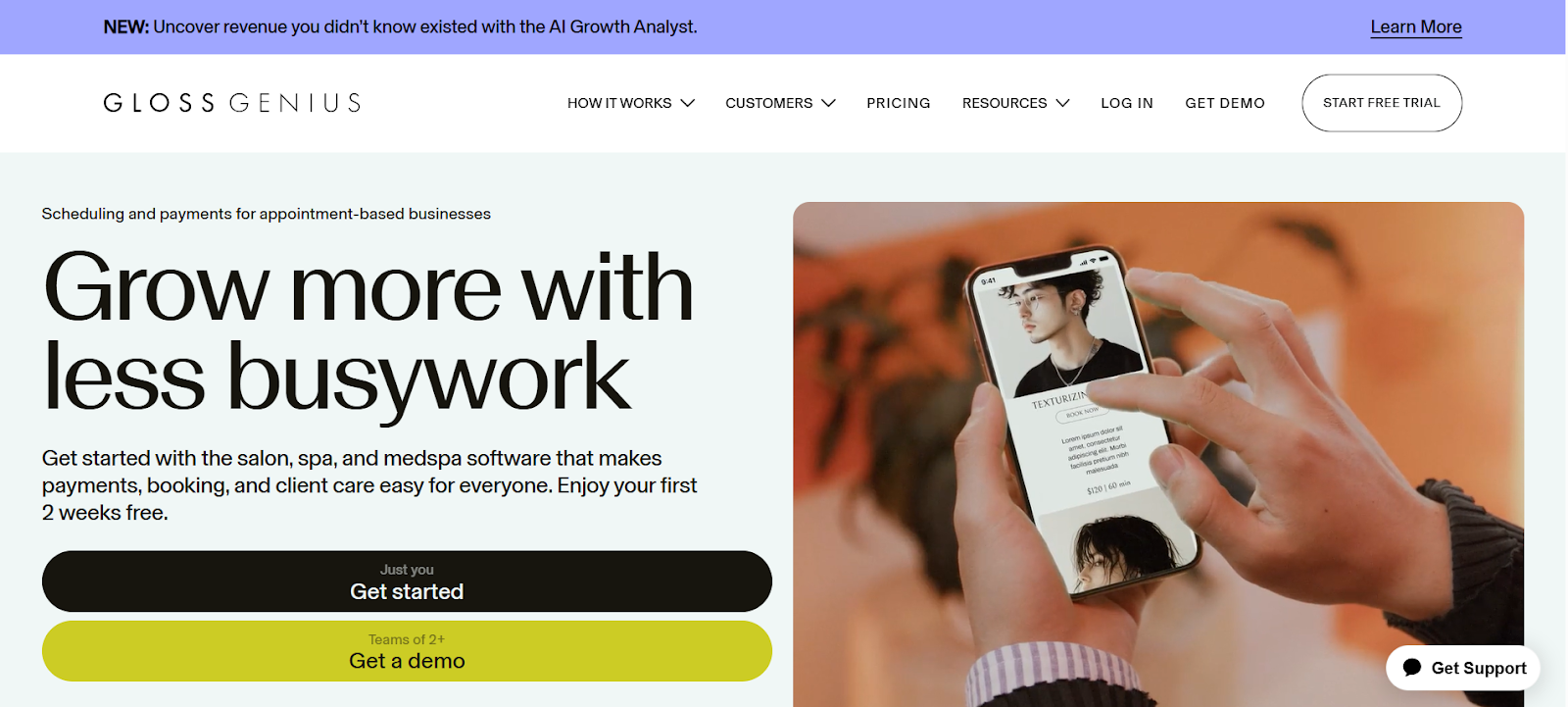
GlossGenius was built for solo beauty and wellness professionals, and the product shows it. Fast setup, a clean booking page that works directly from your Instagram bio and Google Business Profile, and flat-rate payment processing at 2.6% with no hidden fees. Clients book without needing an account, which removes one of the most common points of friction that causes potential clients to abandon halfway through.
Automated appointment reminders, deposits, card-on-file, cancellation policies, and basic post-visit follow-ups are all included. The custom website builder creates a professional client-facing page in minutes.
Best for: Independent estheticians, massage therapists, and solo spa owners who already have a client base and want a clean, affordable platform to manage bookings and payments.
Key strength: One of the fastest onboarding experiences in this category. The booking experience is genuinely smooth for clients, which reduces no-shows and abandoned booking attempts.
Honest limitation: No local SEO, no Google Business Profile management, and no mechanism for attracting clients who have not already found you through other means.
Starting price: From $24/month billed annually.
For a deeper look at how booking-first tools compare, see this comparison of GlossGenius and growth-focused tools.
3. Vagaro — Best for Spas That Want Booking and Basic Marketing Together
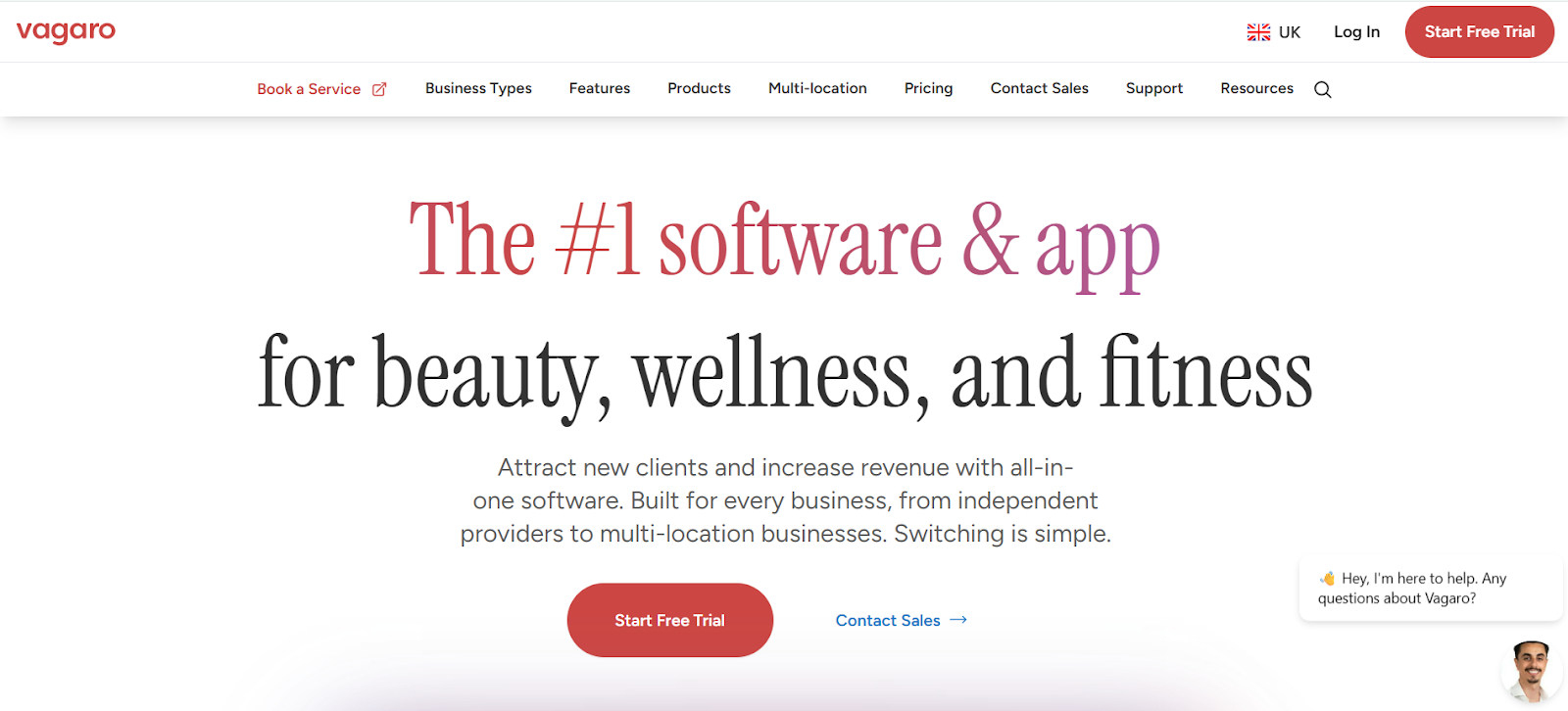
Vagaro has been in the market since 2009 and is one of the most widely used platforms in the beauty and wellness industry. It handles scheduling, payments, client records, email campaigns, and basic reporting in one tool. For a spa owner who wants operational and marketing basics without managing separate platforms, Vagaro covers useful ground at a moderate price.
The Vagaro marketplace gives some exposure to clients already browsing within that ecosystem, though it does not affect your rankings on Google or visibility in AI search tools.
Best for: Small to mid-sized spas that want scheduling, basic client marketing, and an all-in-one operations tool at a reasonable monthly cost.
Key strength: Breadth of features at an accessible starting price. A practical option for spas moving away from paper scheduling or fragmented tools.
Honest limitation: Costs scale with employees and locations. Text marketing and a custom website are add-ons, not included. Payment processing fees are variable, which makes monthly costs harder to predict.
Starting price: From $30/month per location. Additional staff calendars cost $10 per user per month.
If you're comparing tools beyond scheduling, this breakdown shows how Vagaro compares to a growth-focused platform.
4. Fresha — Best for New Spas Watching Costs
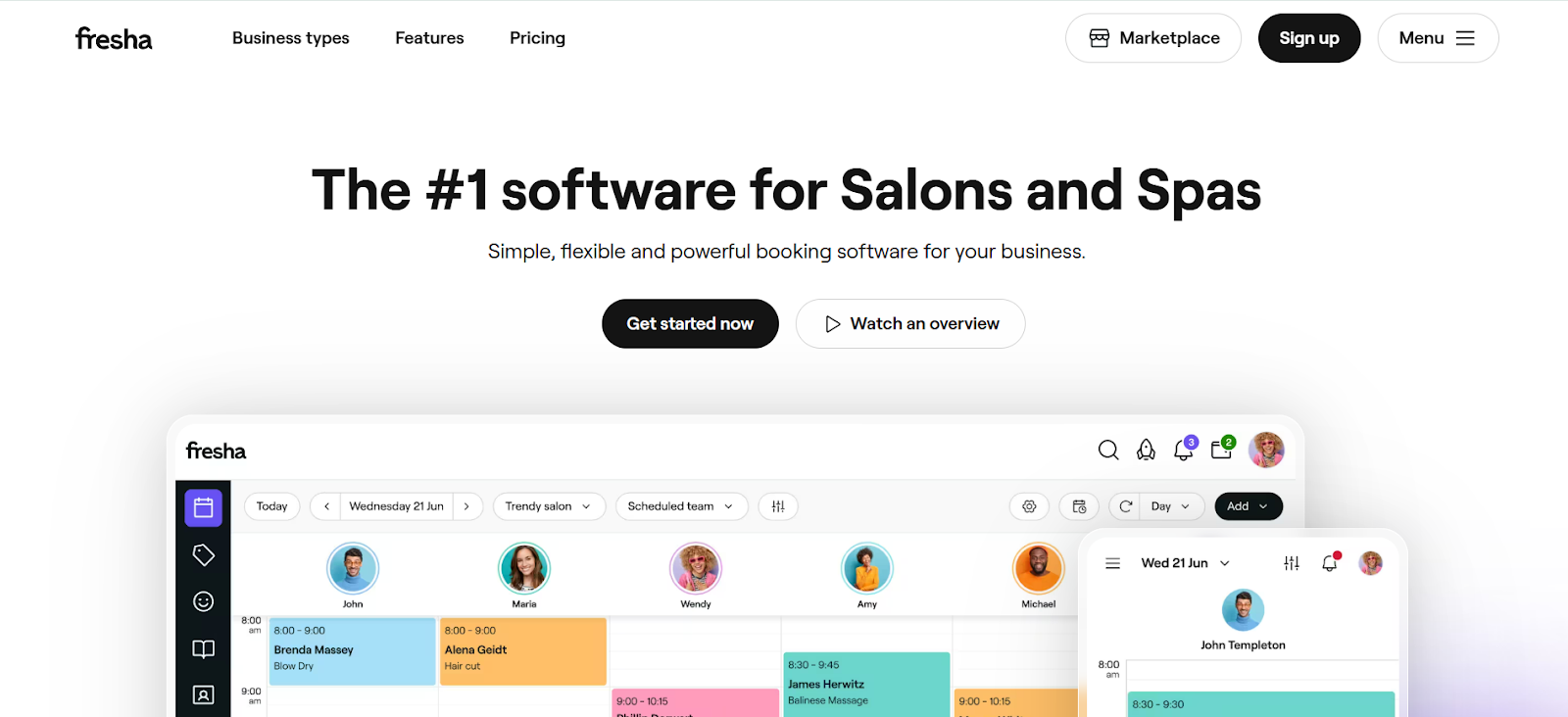
Fresha is a free booking and client management platform with no monthly subscription. It handles scheduling, automated reminders, point-of-sale, and client records. Revenue is generated through a commission on new clients acquired via the Fresha marketplace and through payment processing fees.
For a spa just starting out or with tight margins, Fresha removes the fixed software cost entirely.
Best for: New or small spas that need basic booking infrastructure and want to minimise fixed monthly costs while building a client base.
Key strength: No monthly subscription. Quick to set up. The marketplace provides some built-in discovery, limited to Fresha users rather than the broader Google search population.
Honest limitation: Marketplace commissions add up as booking volume grows. There is no mechanism to rank on Google or appear in AI search tools. A free booking platform that does not help new clients find you is still costing you bookings every week.
Starting price: Free to use. Commission applies on marketplace bookings.
5. Mangomint — Best for Multi-Staff Day Spas With Complex Scheduling
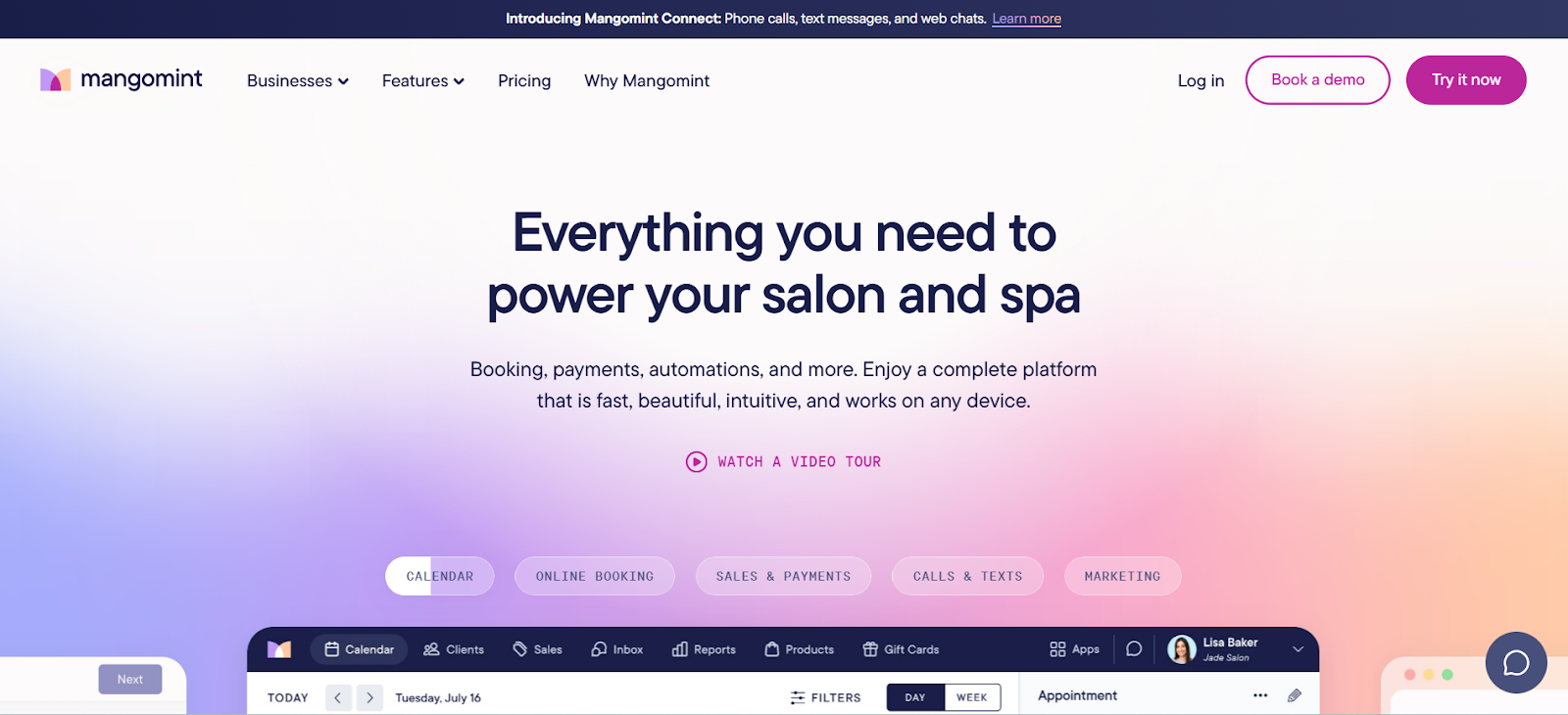
Mangomint is a well-built cloud-based platform for spas and salons with multiple staff members, complex scheduling needs, and a preference for clean, modern software. Staff management, split payments, service customisation, waitlists, and reporting are all executed well.
Best for: Day spas with three or more staff members that need clean scheduling, solid reporting, and a UI that staff find easy to use.
Key strength: Scheduling flexibility and a genuinely well-designed interface. Revenue, service performance, and staff utilisation reporting are among the best in this category.
Honest limitation: Priced for established businesses. No local SEO, no Google ranking capability, and no automated new client acquisition. Strong on running the business you have. Not built to grow it through search.
Starting price: From $165/month. Per-location fees apply at higher team sizes.
6. Mindbody — Best for Multi-Location Spas and Wellness Centres
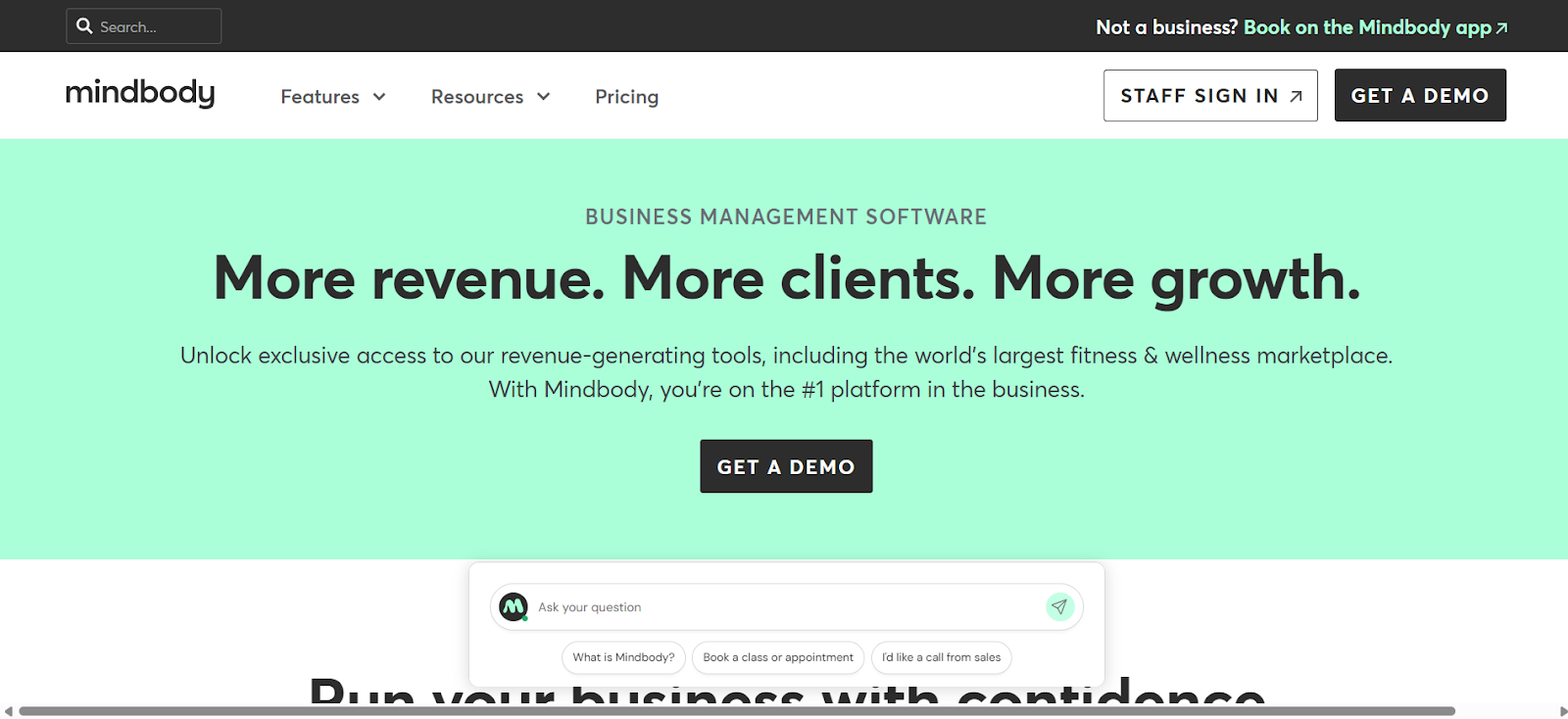
Mindbody is an enterprise-level platform built for large wellness operations: multi-location spas, fitness studios, and membership-based wellness centres. It handles complex scheduling, membership billing, class management, and cross-location analytics at a scale that smaller platforms cannot match.
Best for: Spa groups with multiple locations, wellness centres managing memberships alongside individual services, and businesses with 10 or more staff.
Key strength: Enterprise scheduling, membership management, and the Mindbody marketplace, which provides some discovery to clients already inside that app ecosystem.
Honest limitation: Expensive for smaller operators and requires annual contracts for better pricing. Discovery is limited to the Mindbody app — it does not affect Google rankings or local search visibility.
Starting price: From $99/month per location for basic plans
7. Boulevard — Best for Upscale Day Spas That Want Premium Operations
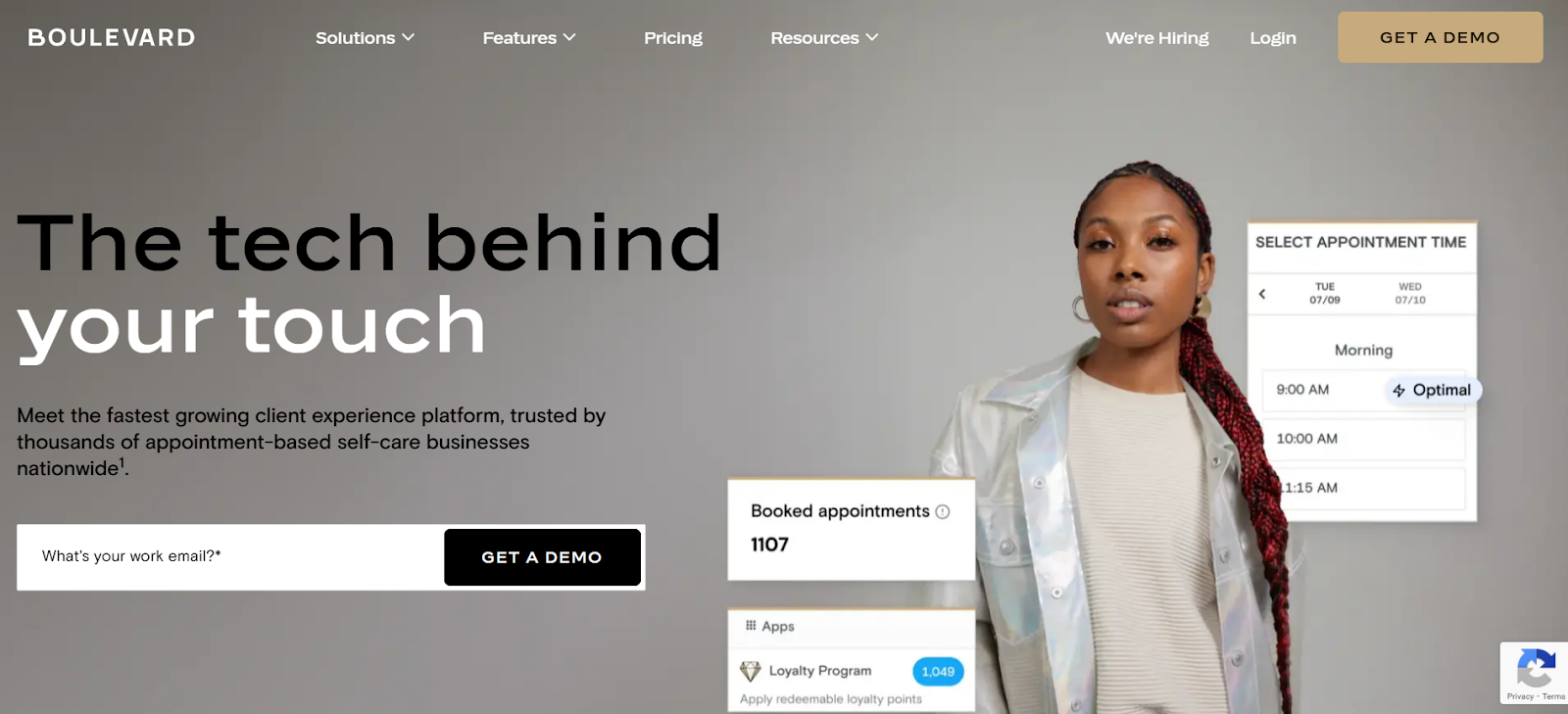
Boulevard is a high-end operations platform for established salons and spas that want polished booking software and strong staff management tools. Payments, service customisation, tip handling, and client profiles are all well-built. The interface is modern and the client-facing booking experience reflects a premium positioning.
Best for: Established day spas and med spas that want premium operations software and have the revenue to support the price point.
Key strength: Clean interface, strong payment handling, and a booking experience that matches a premium brand.
Honest limitation: The price point does not make sense for independent or smaller spa owners. New client acquisition from Google is not part of what Boulevard offers.
Starting price: From $175/month.
8. Phorest — Best for Spas Growing Through Client Retention
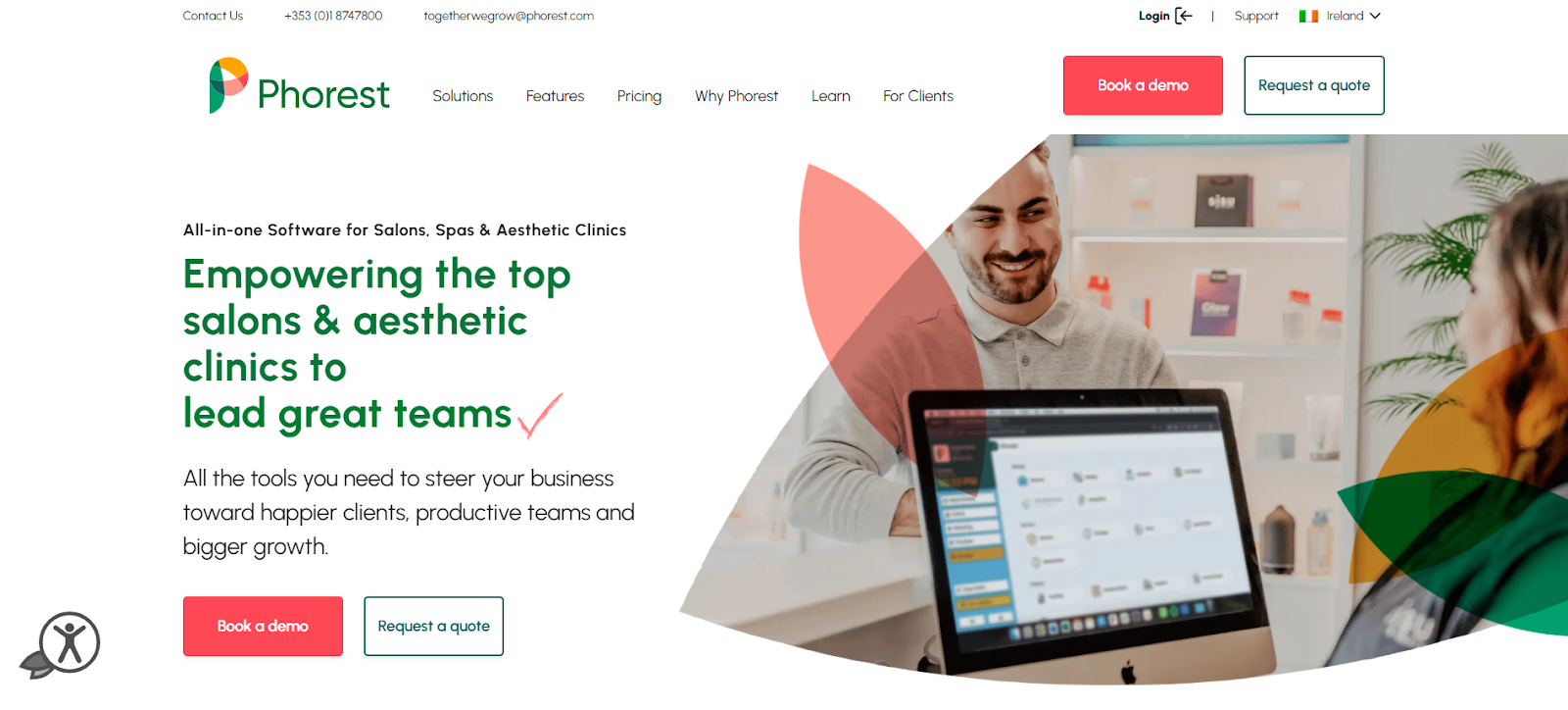
Phorest is a salon and spa platform with strong client retention and loyalty features. The TreatCard loyalty programme has over four million active users. Automated SMS and email campaigns, client segmentation by visit history and spend, and review generation are all built into the platform.
Best for: Established spas with a solid client base where the primary growth lever is keeping existing clients coming back, rather than acquiring new ones from search.
Key strength: Client loyalty, segmented retention campaigns, and the TreatCard programme, which gives clients a tangible reason to rebook.
Honest limitation: Stronger on retention than on new client discovery. No local SEO or Google ranking capability. Best for spas that already have strong foot traffic and want to maximise repeat visits from clients they already have.
Starting price: Custom pricing based on team size.
Real-World Example: Natura Spa, New York City
The Problem
Natura Spa, a two-location spa in New York City, was relying on a remote consultant for marketing and getting results that were slow, inconsistent, and hard to track. Leads felt disconnected from actual bookings, and growing across two locations with disconnected tools made everything harder.
What Changed
After switching to Zoca, Natura Spa started using the Discovery Agent to improve Google visibility and the Win Agent to respond to new enquiries automatically. Instead of relying on outside marketing help and fragmented systems, they had one growth layer working in the background to bring in and convert local demand.
The Result
- 400+ local leads generated in 2 months
- At least 1 new client walking in every day
- Faster setup and easier tracking across both locations
- 24/7 support and a system the team could actually rely on
The Takeaway
Natura Spa did not need more software complexity. It needed a system that helped the business get found, capture demand, and turn enquiries into bookings consistently. That is the difference between software that manages operations and software that drives growth. his is not an isolated result. Similar patterns show up across multiple spa businesses.
How to Choose the Right Spa Software for Your Business
The mistake most spa owners make is choosing software based on features instead of problems.
If new clients are not finding your spa on Google: The problem is discovery. Booking software does not fix this. You need a platform that actively manages your local search visibility. If someone types "facial near me" in your city and your spa does not appear in the top three results, that potential client is booking with someone else today. The Local Business Demand Tracker shows you exactly what potential clients in your area are already searching for.
If enquiries are coming in but not converting: The problem is response speed. A potential client who texts a spa and does not hear back within a few minutes will move on to the next option. Automated lead response solves this without requiring you to monitor your phone between appointments.
If clients visit once and do not return: The problem is retention. Clients who are not followed up with after a visit are far less likely to rebook. Automated post-visit messages and rebooking reminders address this without any ongoing effort.
If your operations are disorganised: The problem is infrastructure. A clean booking category tool with scheduling, payments, and reminders solves this. GlossGenius, Vagaro, Mangomint, or Fresha all handle it well, depending on your team size and budget.
Most spas need more than one problem solved. Match the right tool to your most expensive problem first, then add from there. Choosing software based on features alone, without knowing which problem it solves, is how spas end up paying for tools they barely use.
Spa Marketing & Growth Tools (What Booking Software Misses)
Discovery Agent: Manages your Google Business Profile, builds local SEO signals, and gets your spa found when potential clients search for services near them on Google, Maps, and AI tools. The only spa marketing tool that starts working before a client ever reaches your booking page.
AI Front Desk Agent: Responds to every enquiry automatically and converts leads into confirmed appointments. Stops potential clients from going to the next spa on the list because your team was busy.
Loyalty Agent: Sends post-visit messages and rebooking reminders to every client automatically. Clients come back without you having to remember to follow up.
GBP Optimizer: Free tool that analyses your Google Business Profile and shows the specific improvements that will increase your local search ranking.
Zoca Local Business Demand Tracker: Free tool that shows you exactly what potential clients in your area are searching for, so you can see where demand is and whether your spa is capturing it.
Conclusion
The right spa software in 2026 is not a single-category tool. Most spa owners are running beautiful businesses with inconsistent calendars, not because the service is wrong, but because new clients cannot find them.
That is what the best spa software in 2026 actually delivers: results without requiring you to become a marketer.
If your calendar is not as full as it should be and the problem is that new clients are not finding you, Zoca is built specifically to fix that for spas like yours. Book a demo to see what it looks like for your business.
Frequently Asked Questions
1. What is the best spa software for small businesses in 2026?
The best spa software for a small business depends on where your biggest booking gap is. If your main challenge is that new clients are not finding your spa when they search on Google or Maps, you need a marketing platform like Zoca rather than a booking tool. Booking software manages the clients you already have. Marketing software finds the ones who do not know you yet. Most small spa businesses underinvest in discovery and overpay for booking features they only use half of.
2. What is the difference between spa booking software and spa marketing software?
Spa booking software manages appointments, payments, and client records for people who have already decided to book with you. It is operational. Spa marketing software works upstream from the booking. It gets your spa found when potential clients search on Google, Maps, or AI tools, converts their enquiries into confirmed appointments, and sends follow-ups that bring them back consistently. A spa with only booking software has nothing working on the discovery problem. New clients are not arriving because no tool is making the business findable in local search, and that is where the overwhelming majority of new bookings begin. Visibility comes before scheduling.
3. How much does spa software cost in 2026?
Spa software pricing in 2026 ranges from free to $175 or more per month. Fresha is free with commissions on marketplace bookings. GlossGenius starts at $24 per month. Vagaro starts at $30 per month per location. Mangomint starts at $165 per month. Boulevard starts at $175 per month. Mindbody and Phorest use custom pricing. Zoca's pricing is custom and is available here. The monthly subscription price is only part of the calculation. A free booking platform that does nothing to bring new clients through the door costs nothing on paper but could be losing you thousands in missed bookings each month.
4. Does spa software help with Google rankings?
Most spa software has no effect on your Google rankings. Booking platforms like Vagaro, Fresha, GlossGenius, and Mindbody manage appointments and payments but do not include local SEO capability. Getting found on Google requires active management of your Google Business Profile, fresh content, a review generation strategy, and consistent local signals, none of which come with standard booking software. Zoca's Discovery Agent handles all of this as its core function. Spas working with Zoca have seen Google Business Profile views increase by over 1,200% and generated hundreds of local leads within the first two months of being active. Check out spa marketing ideas to grow your visibility.
5. What spa software is best for client retention?
The strongest platforms for client retention are Phorest and Zoca. Phorest has the TreatCard loyalty programme with over four million users, plus segmented client campaigns and automated messaging. Zoca's Loyalty Agent automates post-visit messages and rebooking reminders for every client without you having to manage it manually. The most common retention mistake is assuming clients will rebook themselves. Most will not, regardless of how good the service was. Any spa software that automates the follow-up touchpoint will improve retention, as long as it is set up and active. The spa that sends a message two days after every visit will always retain more clients than the one that does not.
7. What is the best spa software for a day spa specifically?
For day spas, separating the operations question from the growth question leads to better decisions. On the operations side, Mangomint handles multi-staff scheduling cleanly and Boulevard suits premium day spas with a strong brand positioning. For growth and new client acquisition from local search, Zoca is the only platform on this list built to address that problem directly. A day spa with strong operations but weak local search visibility will see inconsistent booking volumes regardless of how good the internal software is. Getting found is the problem most day spa owners are actually facing, and most of the software they are currently evaluating does not address it.